

Quick answer
What Is Gum Disease?
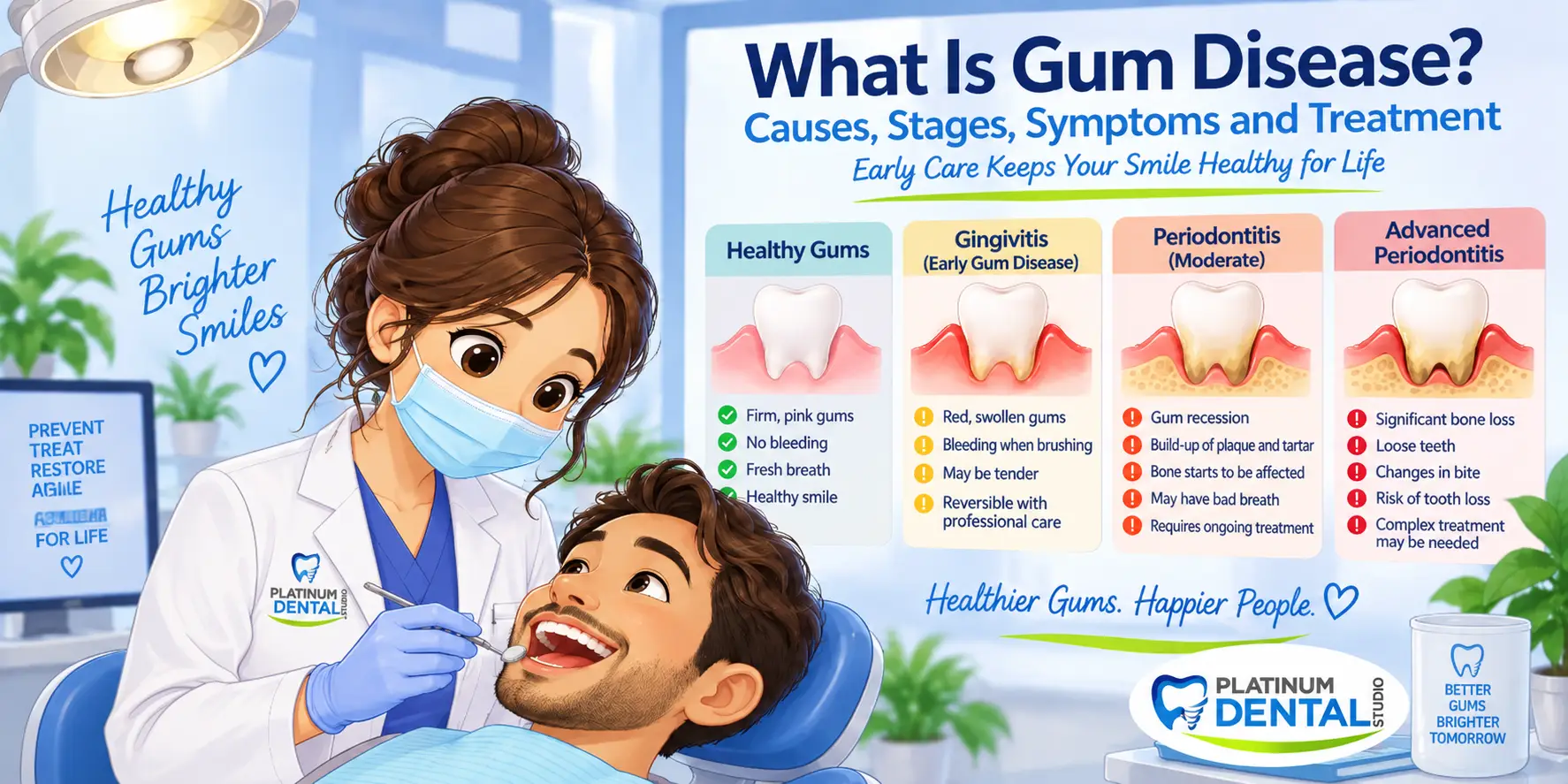
Gum disease can often be identified early through a careful dental examination.
What causes gum disease?
The main cause is dental plaque, a soft and sticky film containing bacteria that continuously forms on teeth. When plaque is not removed effectively from the gumline and between teeth, the gums may become inflamed.
Over time, plaque can harden into calculus, also called tartar. Calculus cannot be removed fully with normal brushing and flossing and usually requires professional dental instruments. Its rough surface can make plaque control more difficult.
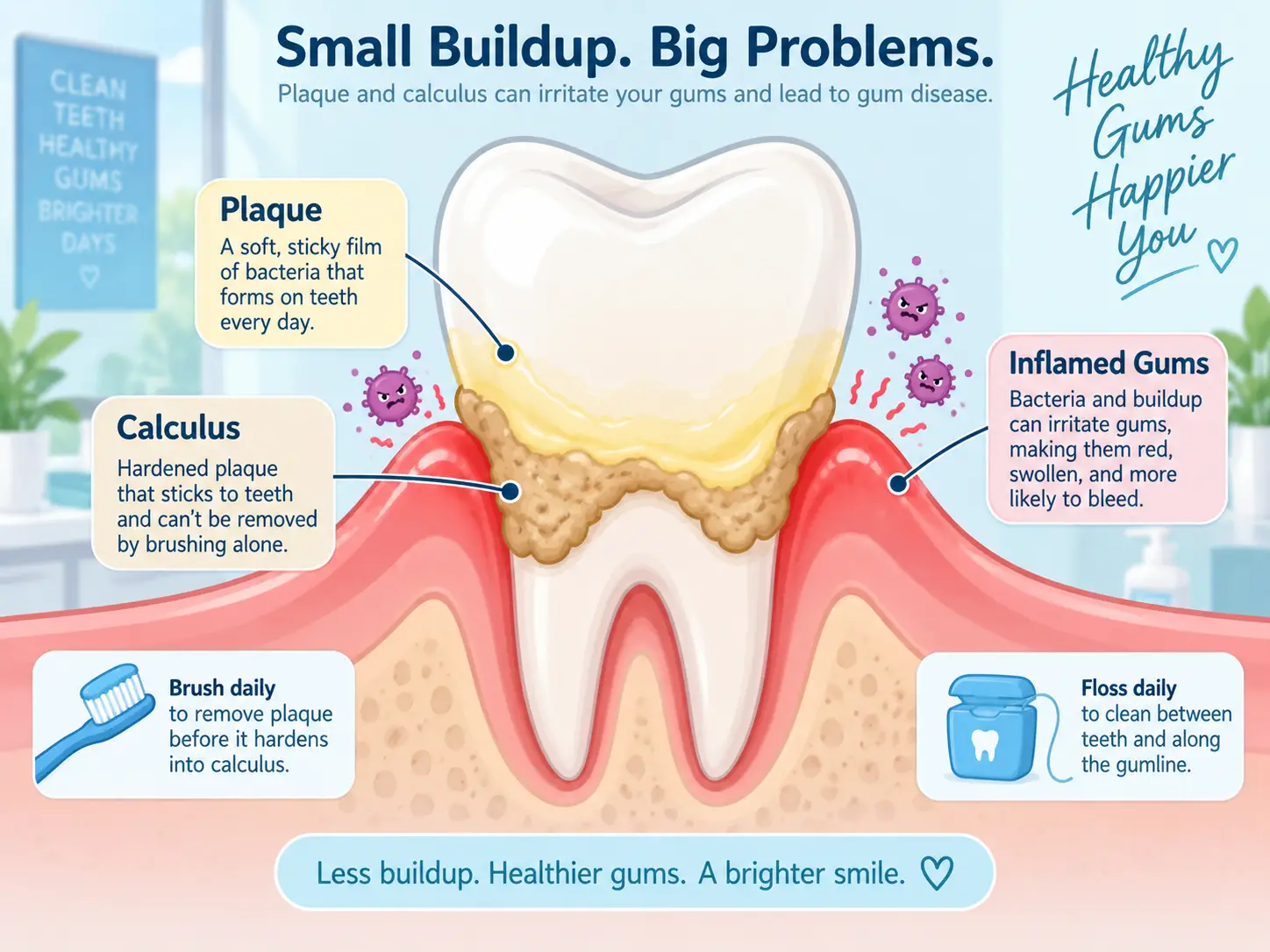
Plaque can harden into calculus and contribute to inflamed gums.
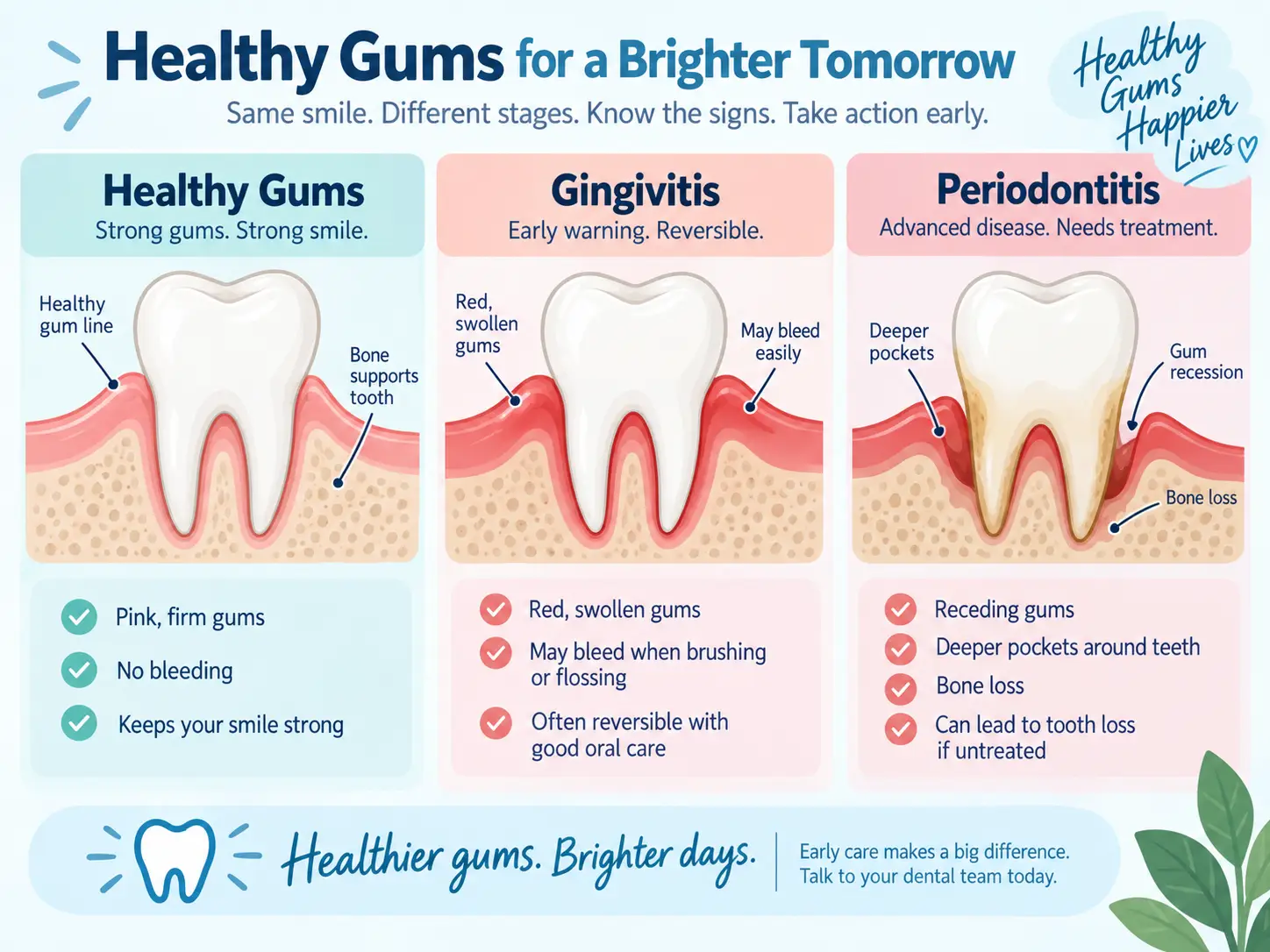
A simple comparison of healthy gums, gingivitis and periodontitis.
Gingivitis: early gum disease
Periodontitis: advanced gum disease
Periodontitis develops when inflammation extends below the gumline and damages the tissues and bone that support the teeth. Spaces called periodontal pockets may form between the teeth and gums, allowing bacteria and calculus to collect more deeply.Without appropriate management, teeth may become mobile, change position or eventually be lost. Periodontitis is generally a long-term condition requiring professional treatment, careful home care and regular periodontal maintenance.
What are the symptoms of gum disease?
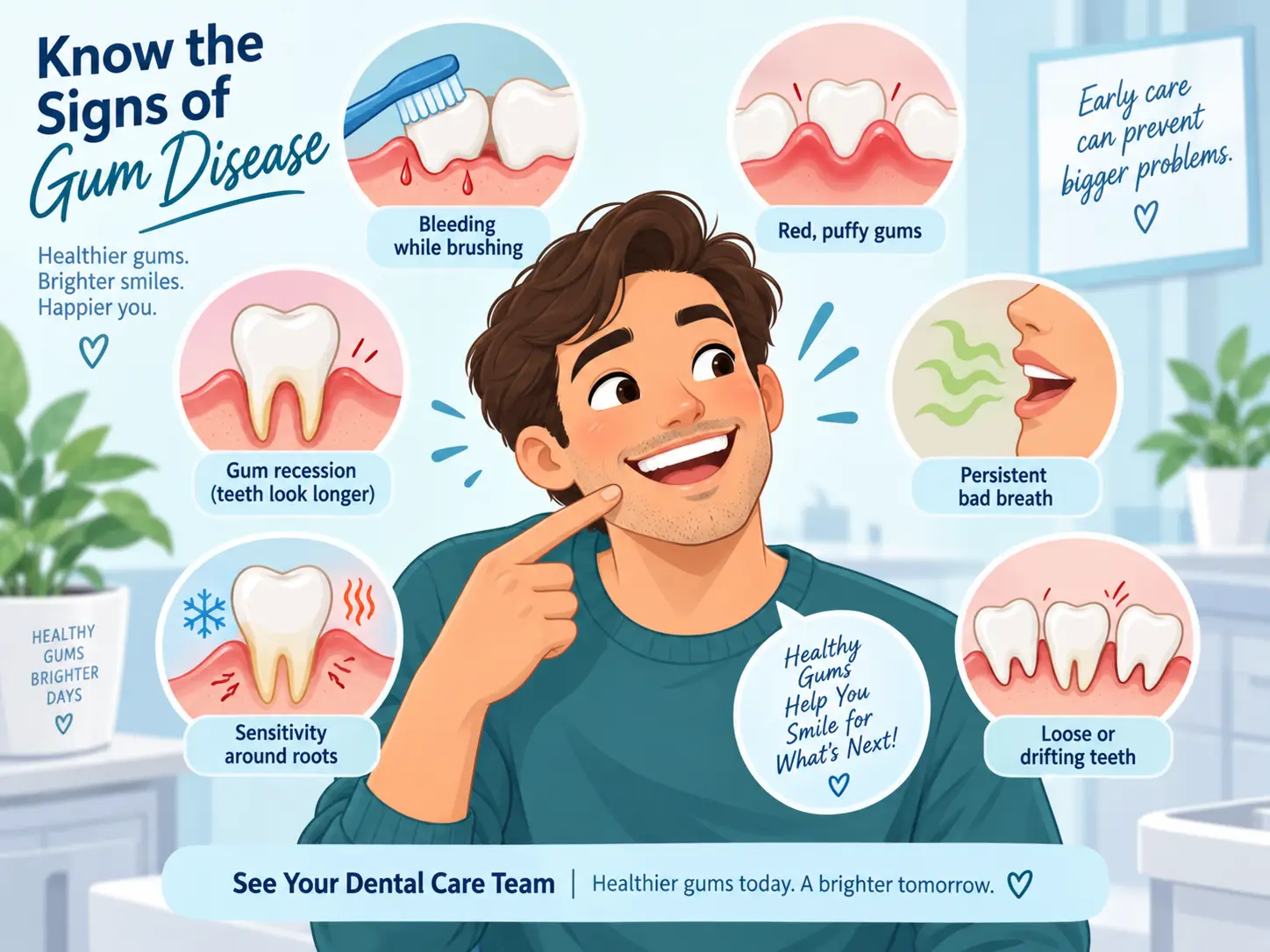
Who is at greater risk?
Inadequate plaque removal: Irregular or ineffective brushing and interdental cleaning allows plaque to remain around the gums.
Smoking and tobacco use: Smoking increases the risk of periodontal disease, can slow healing and may mask bleeding.
Diabetes: Diabetes and periodontal disease can influence each other. Poorly managed blood glucose may increase gum-disease risk and severity.
Age and previous gum disease: Risk increases with age and with a history of periodontitis.
Pregnancy and hormonal changes: Hormonal changes can make gums more reactive to plaque and more likely to bleed.
Dry mouth: Reduced saliva may make plaque control more difficult.
Certain medicines: Some medicines may affect saliva or cause gum enlargement. / Never stop prescribed medicine without medical advice.
Genetic susceptibility and immune health: Some people are more susceptible even when they make reasonable efforts with oral hygiene.
Stress and lifestyle factors: Stress may affect immune function and daily self-care routines.
How does a dentist diagnose gum disease?
A gum assessment is more than simply looking for bleeding. Your dentist may review your dental and medical history, medicines, smoking or vaping, diabetes, pregnancy and previous periodontal treatment.
The clinical examination may include:
Can gum disease be reversed?
Gingivitis
Yes, gingivitis can often be reversed when plaque and calculus are removed and the patient maintains effective daily oral hygiene.
Periodontitis
Periodontitis can usually be controlled or stabilised, but damage to supporting bone and attachment is not generally fully reversible. The aim is to reduce inflammation, slow or stop further destruction, improve cleanability and maintain the teeth for as long as possible.
Results depend on disease severity, home care, smoking, diabetes management, attendance for maintenance and other individual factors. No treatment can guarantee that every affected tooth will be retained.
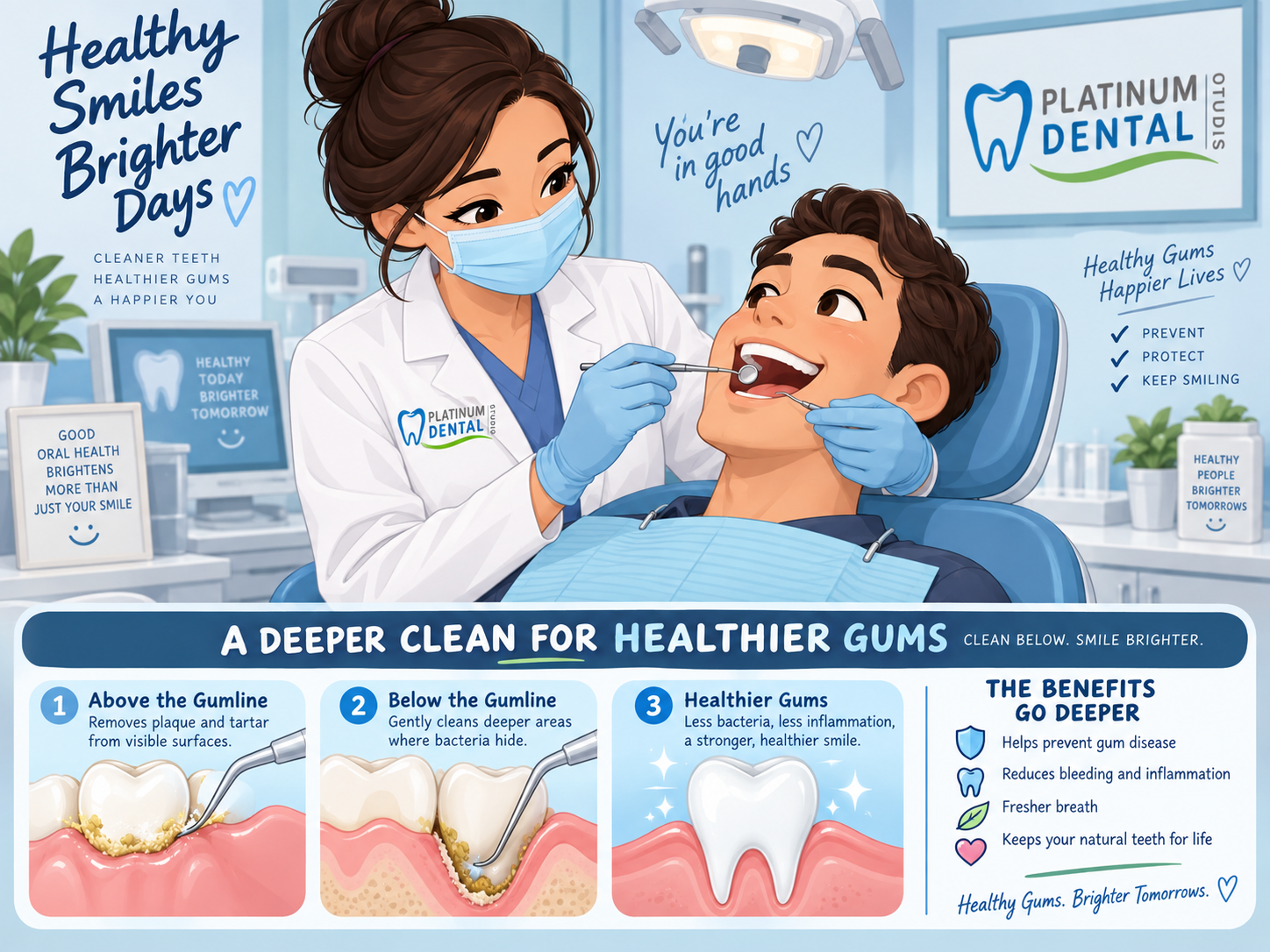
Professional gum care may include assessment, cleaning above and below the gumline, and ongoing maintenance.
Do antibiotics cure gum disease?
Antibiotics are not a routine substitute for removing plaque and calculus or improving daily cleaning. They may be considered in selected situations as part of a broader treatment plan. The decision should be made by a dental practitioner after examining the patient and considering the benefits and risks.
How can I prevent gum disease?
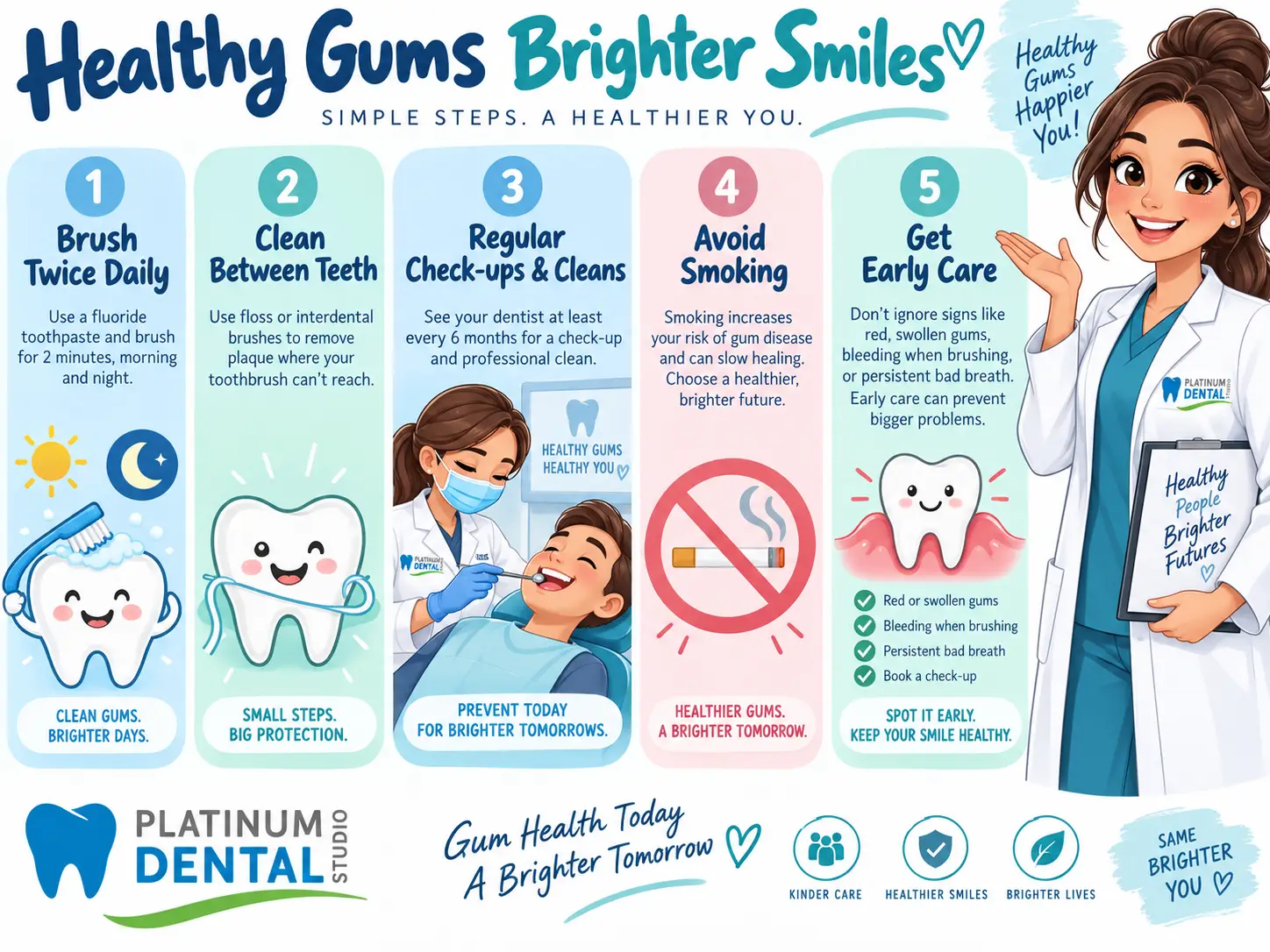
Myth versus fact
When should I see a dentist?
Arrange a dental examination if your gums bleed repeatedly, look swollen, are receding, or if you have persistent bad breath, a bad taste, loose teeth or changes in your bite. Early gum disease is usually easier to manage than advanced disease.Seek prompt dental or medical advice for rapidly increasing facial or gum swelling, fever, difficulty swallowing or breathing, uncontrolled bleeding, or severe pain. These symptoms may require urgent assessment.
Dr Monica's advice
Gum disease care in Albany Creek
At Platinum Dental Studio, we welcome patients from Albany Creek and surrounding North Brisbane communities. We aim to provide a gentle, respectful assessment and explain the findings in plain English. Where treatment is recommended, we discuss the proposed care, alternatives and expected fees before proceeding whenever possible.
Frequently Asked Questions
Is gum disease contagious?
The bacteria associated with gum disease can be shared through saliva, but gum disease does not spread in the same simple way as a cold. A person’s oral hygiene, smoking, diabetes, genetics and immune response also influence whether disease develops.
How quickly does gum disease progress?
Progression varies. Some people remain stable for long periods, while others experience faster breakdown because of disease severity or risk factors such as smoking and poorly managed diabetes.
Can gums grow back?
Inflamed gums may become firmer and less swollen after treatment, but gum recession and lost supporting bone do not usually return completely without specialised procedures. Suitability for treatment requires assessment.
Can mouthwash treat gum disease?
Mouthwash may be useful in selected cases, but it does not remove calculus and cannot replace brushing, interdental cleaning or professional treatment.
How often will I need periodontal maintenance?
The interval is personalised. Some patients may need visits more often than the traditional six-month schedule, especially after treatment for periodontitis.
Can children or teenagers get gum disease?
Gingivitis can occur in younger people. More destructive forms are less common but require prompt professional assessment.
Will treatment make my teeth sensitive?
Temporary sensitivity can occur after calculus is removed or previously covered root surfaces are exposed. Your dental team can recommend suitable strategies if this happens.
Will my gums bleed more when I start flossing?
Light bleeding can occur when inflamed gums are first cleaned properly. Use a gentle technique and seek assessment if bleeding persists, is heavy or is unexplained.
Can gum disease cause bad breath?
Yes. Plaque, calculus and inflammation may contribute to persistent bad breath, although other dental and medical causes are also possible.
Can I lose teeth from gum disease?
Advanced periodontitis can damage supporting bone and may lead to loose teeth or tooth loss. Early diagnosis and long-term maintenance can improve the chance of retaining teeth.
Can gum disease affect dental implant placement?
Yes. Gum disease is not always an absolute contraindication to dental implant treatment, but active or uncontrolled periodontal disease can increase the risk of complications and implant failure. Before implant placement, the gums should be assessed and any active disease treated and stabilised. Good plaque control, healthy gum tissues and ongoing periodontal maintenance can help improve the chance of long-term implant success.
Friendly call to action
Concerned about bleeding, swollen or receding gums? Book a dental examination with Dr Monica Yee and the team at Platinum Dental Studio in Albany Creek. Call (07) 3264 2757 or use our online booking page.
Medical Disclaimer
This article provides general oral-health information and does not replace an examination, diagnosis or personalised treatment advice from a registered dental practitioner or medical practitioner.
Related Platinum Dental Knowledge Centre™ Articles
References for clinical review
Clinically reviewed by Dr Monica Yee — September 2026” or “Last reviewed: September 2026.